Cold-Weather Hiking With Dogs: What I Learned on a Windy 30° Day

Winter Hiking with Dogs: Safety Tips, Gear Checklist & Decision Guide

Winter hiking with dogs can be amazing. The trails are quiet, the scenery can be starkly beautiful, and the dogs love it. But cold weather also adds a layer of uncertainty, especially when the wind chill drops and the trails turn icy.
If you're new to winter hiking with your dog, or just want a quick gut-check before heading out, I've put together two completely free, no-email-needed resources you might find helpful:
Winter Hiking with Dogs: A Practical Checklist: a quick prep list you can glance at before loading the car
Is This Hike Right for My Dog Today? A Cold-Weather Decision Guide: a simple way to think through conditions, your dog's age, and risk factors before committing

In early December, the pups and I traveled up to the North Carolina mountains, and it was an amazing post-Thanksgiving-pre-Christmas escape from reality. But I have to say, after a couple of mild Atlanta winters, I wasn’t exactly prepared for the cold. Within 24 hours of arriving, I had purchased new gloves and a hat for myself and new jackets for Pepper and Scout (we did not exactly come prepared!).
Still, it was so beautiful, and nature was calling all of us to get outside. So I did my research before we set out on a chilly 30° (Fahrenheit), overcast, windy morning to hike the summit trail at Elk Knob State Park. But even with all the research and preparation, I still found myself learning some lessons along the way as I hiked with Pepper (my chaotic and energetic 1-year-old) and Scout (my slowing-down-but-still-dramatic 13-year-old).
If you’re looking to get out on the trails with your pup this winter, here’s what actually matters, based on research and real-world experience.
The Plan: How To Prepare for Cold-Weather Hikes
How Cold Is Too Cold for Hiking with a Dog?

Wouldn’t it be nice if there were a simple answer to that question? But, of course, there’s no single temperature that’s too cold for every dog. Their cold tolerance depends on a number of factors, including:
Breed and type of coat: There’s a reason for all those videos of Huskies refusing to come inside on snowy days. Double-coated dogs, like Shepherds and Retrievers (and, yes, Huskies), are usually able to tolerate colder weather because their coats offer additional insulation and water-resistance.
Size and body fat: Pups with more fat and muscle tend to have more natural insulation from cold.
Age and overall health: Older dogs or dogs with health problems may have a harder time regulating their body temperature, leading to a lower tolerance for cold.
Wind, shade, dampness, and elevation: More than just the temperature matters. Even small amounts of wind or damp can make cold temps feel much harsher.
I knew to expect it, but was still surprised at how much colder it felt on the trail — especially on the shaded westerly side of the mountain and at the higher elevations with the wind blowing — than it did at the trailhead.
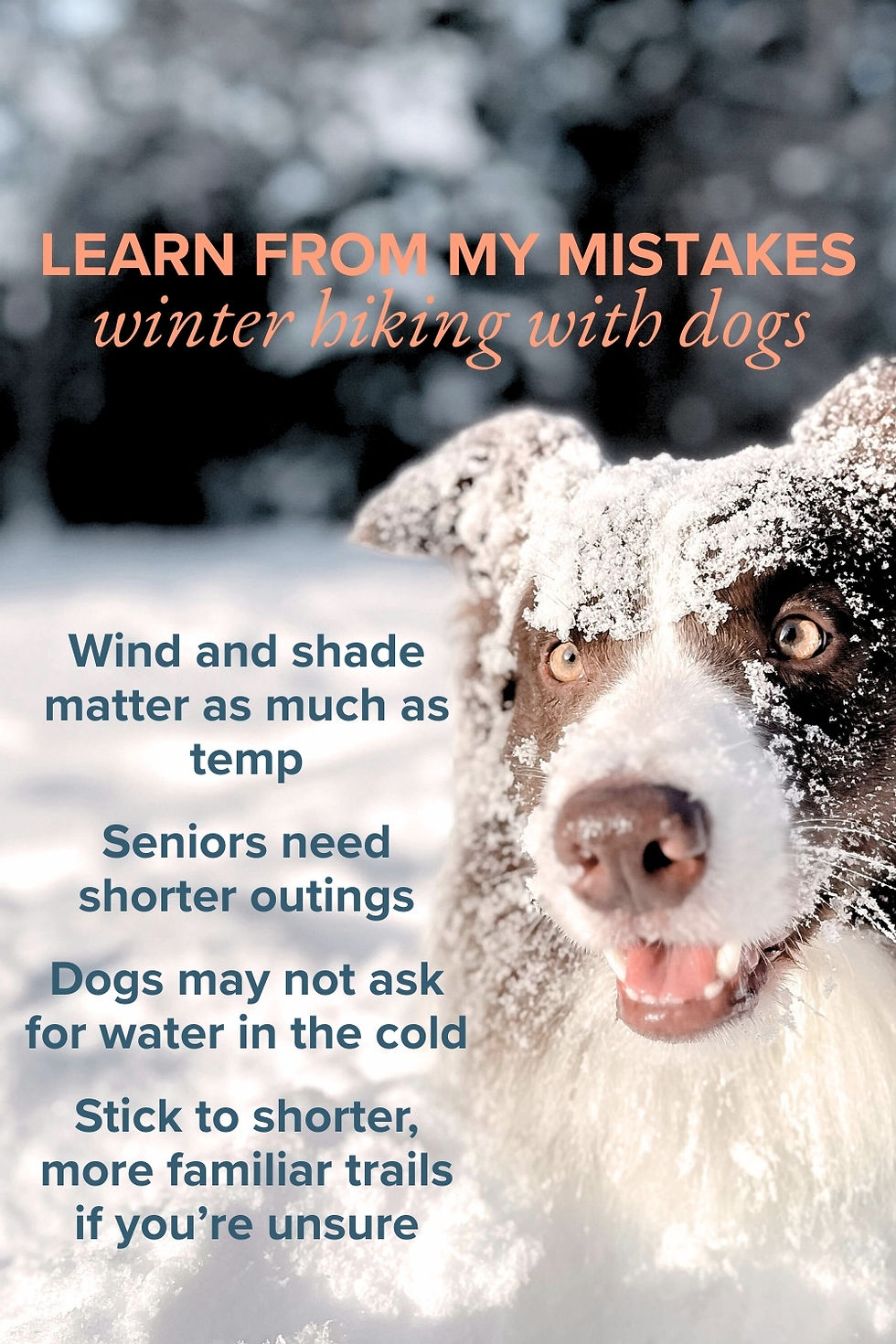
Takeaway: Pay attention to wind chill and overall conditions, not just the hourly temperature forecast. And pay attention to your dogs along the route. What matters most is how your dogs are acting, not the numbers on your weather app.
Hydration Still Matters
It’s easy to forget about hydration when it’s cold out, but dogs still lose moisture through respiration, especially in cold, dry air.

Pepper, in particular, is far less interested in water during winter hikes, but I am always careful to offer water to the dogs regularly. She did drink like a camel when we finally got back to the car, once she was no longer distracted by the sights and smells of the trail.
A few important reminders:
Bring plenty of water along, even on short winter hikes
Offer it more often than you think you need to
Don’t rely on snow — it’s not a reliable substitute for water
Lesson Learned: Just because your dog isn’t asking for water doesn’t mean they don’t need it. Dehydration can sneak up faster in winter because the usual cues — heat and heavy panting — are missing.
Feeding & Energy Needs in Cold Weather
Cold-weather hikes may burn more calories because dogs are working to regulate their body temperature as well as move along the trail.

Feeding immediately before or during strenuous exercise may be risky for some dogs, as it may cause uncomfortable or even life-threatening conditions such as digestive upset or bloat. This is especially true for deep-chested breeds (like Scout), which are at a higher risk for bloat.
To be safe, I usually wait until the end of the hike when we’ve had a chance to relax and cool down (or warm up) before offering a small snack.
Practical Tip: Pack small snacks like jerky or even kibble for after your hike, and consider asking your vet about your dog’s specific risks if you want to feed immediately before or during exercise.
The Gear Dogs Actually Need (and What You Can Skip)
My research surfaced about a dozen different lists of gear for cold-weather hikes. After digging through a lot of advice, here’s what actually made a difference for us…and what didn’t.

What to pack for a winter hike:
A secure, well-fitted harness or collar, depending on your pup’s walking habits
A standard leash (retractable leashes are hard to grip with gloves and don’t work well in icy conditions...or with crazy dogs like mine in any weather)
A water bottle and bowl for the pup (either a collapsible bowl or a bottle with an integrated bowl is a nice addition)
A jacket for short-haired dogs, low-body-fat dogs, or seniors
Nice-to-haves:
A blanket or towel (to leave in the car for after the hike)
Paw protection (booties or paw balm)
Bright or reflective gear for shorter daylight hours
(If you like having everything in one place, our Winter Hiking with Dogs: A Practical Checklist pulls all of this together into a simple, printable list.)
The jackets I bought for my dogs were inexpensive pet store finds, but they came with two layers: a fleece inner layer and a more weather-resistant outer layer. It was great to have options. Scout, who has lost a lot of muscle mass in her old age, sported both layers for the entire hike, while Pepper just used the outer layer to cut down on wind chill.
And having a blanket ready in the car helped Scout warm up before the car’s heater kicked in.
Paw Safety: Ice, Salt, and Snowballs

Winter trails can be rough on paws. Ice can cause small cuts or abrasions while snowballs can form between toes, especially on longer-haired dogs. And if your path has been de-iced with salt, that can burn paws or be harmful if licked.
The good news is that a few simple steps can prevent many issues. Trim the fur between paw pads and apply paw balm before heading out. And it’s a good idea to rinse paws after the hike, especially if you’ve walked on or near salt.
Be on the Lookout: Even if your dog doesn’t seem bothered on the trail, paw irritation often shows up later that day or the next morning.
On the Trail: What To Watch For
Trail Conditions & Winter-Specific Risks
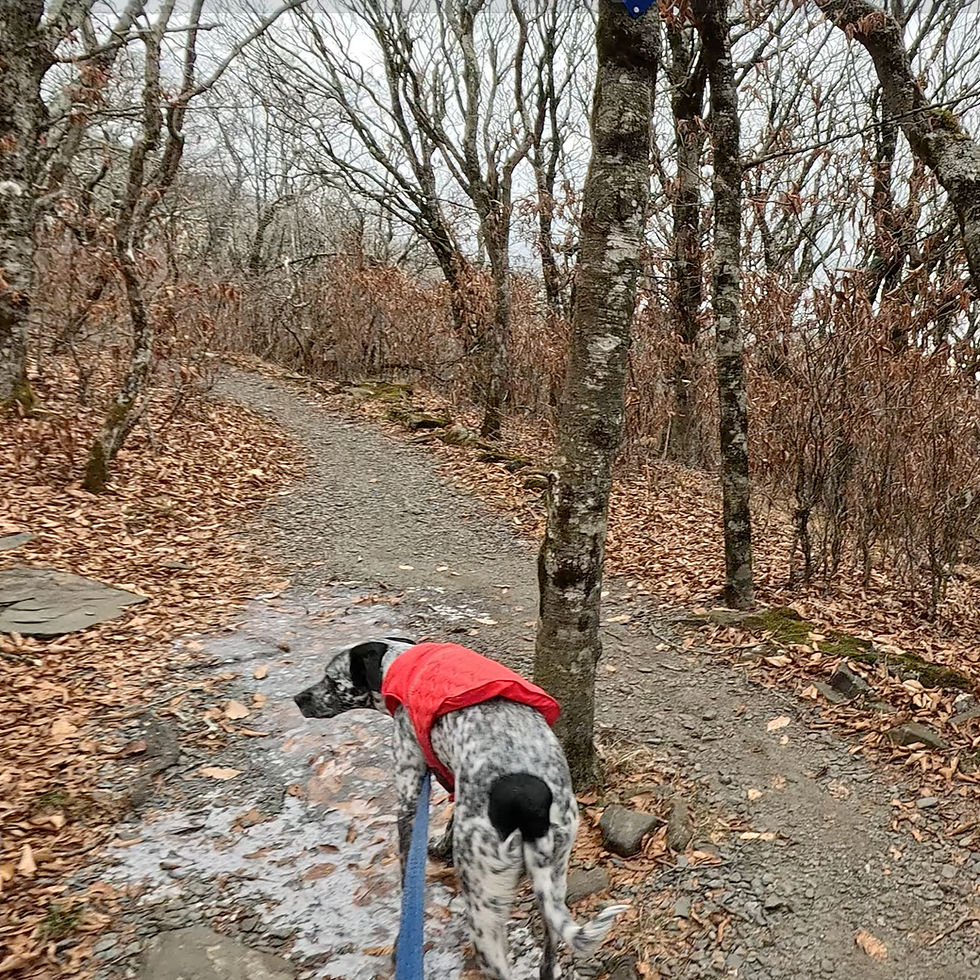
Winter hiking comes with risks you don’t always deal with in warmer months.
Frozen streams or puddles may not support your (or your pup's) weight
Slippery rocks, icy patches, and slick leaves make for unsteady footing
Earlier sunsets
Fewer people on trails, which can mean both fewer people around to help if you need it AND more wildlife encounters
We encountered a few icy spots, and Scout (who is a bit more unsteady on her feet anyway) wiped out once because she was too busy smelling to pay attention to her footing. Luckily, it was just a small patch in a flat area, but it reminded me of the need to be very aware of our footing, especially in steeper areas.
Tip: Start your hike earlier than you think you need to because winter days get dark fast.
Signs Your Dog Is Too Cold on a Hike
Dogs have an amazing ability to work through pain and discomfort without showing any signs, so it’s up to us to watch our pups closely.
Look for any signs of:
shivering
slowing down
stiffness
seeking warmth or trying to stay close to you.
Why Age Matters: Hiking with Young and Senior Dogs
Pepper and Scout are on opposite ends of the age spectrum, and that changes how I approach winter hikes.

Younger Dogs
Young dogs often don’t know when to stop. And Pepper never knows when to stop…ever. Cold weather can easily mask fatigue, making it easy for them to overdo it.
Things to watch for:
Sudden slowing or sitting
Signs of sensitive paw pads
Overexcitement or excessive distraction on quieter winter trails
Also, because growth plates may still be finishing development, it’s good to avoid technical terrain and repetitive jumping in young pups. (As always, check with your vet for specific advice for your dog!)
Senior Dogs
Cold weather affects senior dogs very differently. Their joints stiffen much more easily, and they can’t regulate body temperature as efficiently.

For Scout (and other senior dogs), that means:
a jacket is essential gear
we set a slower pace and take more frequent breaks
I watch her more carefully on icy or uneven terrain
she needs more time to warm up and recover after the hike
Unfortunately, this hike pushed Scout’s limits more than I expected. While she may have handled this hike easily last winter, it was a bit too much this year. Towards the end of the hike, Scout began to shiver if we stopped walking for any length of time, a sign that she was struggling to regulate her body temperature. I had kept her out too long.
Lesson Learned: Don’t take any chances with senior pups, as their abilities can change rapidly as they age. Ensure your outdoor adventures are limited to shorter time periods or more temperate winter days.
Hiking with Dogs of Very Different Ages
Believe me, Pepper always has the energy to go further, faster, and more chaotically. But hiking with dogs on both ends of the age extremes means I plan everything around the senior dog.
What works best for me:
Choose a trail based on the senior dog’s ability (younger pups will be happy just to be outside)
Take more frequent breaks to match the senior’s pace
Avoid highly technical routes
Make sure the senior pup is warm both before and after the hikes, with a warm car and blankets
Key Tip: The warning signs in younger and older dogs can be very different, so pay close attention.
Hike with Confidence
Cold-weather hiking with dogs doesn’t have to be stressful. Just do a little planning and keep a close eye on your pup, and a winter hike can be one of the most peaceful and enjoyable ways to spend time together.
Our hike up Elk Knob reminded me of something I already believed in: you don’t need to aim for perfection. Sometimes the best adventures come when you just get out there and have fun.
Before You Head Out
If you're planning a winter hike with your dog, don't forget to grab either (or both) of these free, no-strings downloads:
Winter Hiking with Dogs: A Practical Checklist for packing and prep
Is This Hike Right for My Dog Today? A Cold-Weather Decision Guide for making the go/no-go call
They're meant to make getting outside feel calmer and more confident, not more complicated.
And if you'd like to follow along with our mission to help dogs in need (plus get occasional updates, stories, and new resources), you're always welcome to join the pack using the form at the bottom of the page.
Every Click Helps a Dog in Need
If you found this post helpful, please share it with a fellow hiker or dog-lover, and explore more practical advice on our blog. We are on a mission to help dogs in need and the humans who love them, and every click helps!


Comments